


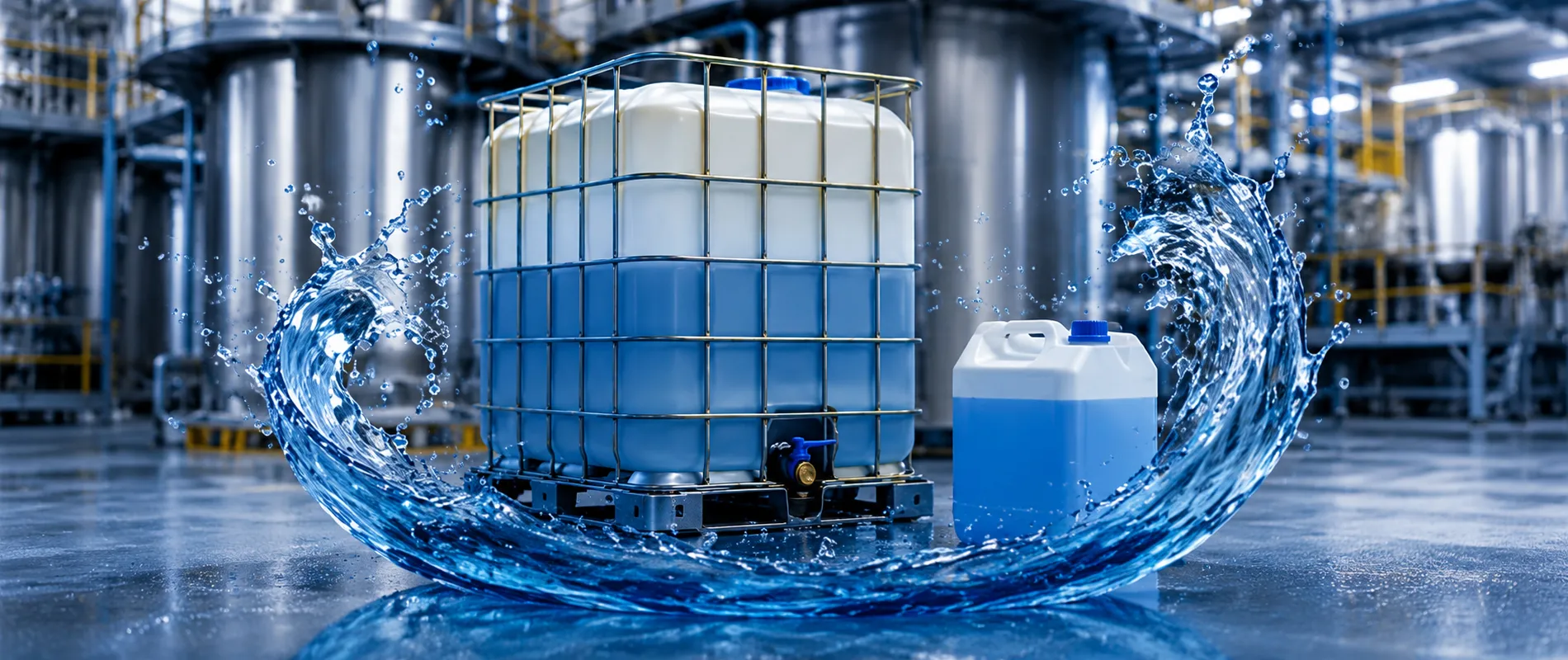
To guarantee a consistent formulation is not enough to produce AdBlue. Manufacturers need to monitor raw materials, the quality of the water used, contamination hazards, production equipment, test procedures, storage, and batch records during the product life cycle. Since AdBlue is utilized in a Selective Catalytic Reduction (SCR) system, changes in quality may impact the system's intended use and may cause issues for the downstream user.
ISO 22241 certification provides a framework for the control of the quality and handling of AUS 32 also referred to as AdBlue or Diesel Exhaust Fluid (DEF). For manufacturers, its worth is evident in the production control as they work day in and day out. Well-controlled approach to quality does not involve quality checks as an inspection after manufacturing, but instead involves quality checks at strategic stages of the manufacturing process.
For companies that produce AdBlue, the knowledge of these production controls can contribute to have more consistent products from batch to batch, lower risk of contamination, better traceability and better quality-control practices.
ISO 22241 and AdBlue Production Quality
ISO 22241 covers the requirements of AUS 32 quality, testing, handling, transportation and storage. This article concentrates on the production and quality control perspective as this is not addressed in the existing SCUBE resources on ISO 22241, which are available as separate documents.
The goal of the production is simple – to consistently manufacture something that is able to satisfy the required product specifications while avoiding the introduction of unwanted contaminates in the manufacturing process and during post-manufacture handling.
This is a need for quality controls to be built into the production process, not a one-off quality control check at the end of the process.
Raw Material Control at the Start of Production
The quality of finished AdBlue begins with the materials entering the production process.
Manufacturers need suitable controls for incoming raw materials and should establish clear acceptance criteria before materials are introduced into production. This can include reviewing supplier information, checking incoming material documentation, identifying batches, and performing appropriate verification activities.
Important controls can include:
- Identification of incoming raw materials
- Supplier and material records
- Verification against defined specifications
- Batch identification
- Controlled storage before use
- Prevention of mix-ups between materials
Controlling materials at the beginning of the process helps prevent an unsuitable input from moving through production and becoming a finished-product quality problem.
Maintaining Water Quality
Water quality is particularly important in AdBlue production because the solution requires high-purity water.
Mineral residues, unwanted substances, or other contaminants can affect product quality. For this reason, manufacturers need appropriate controls around water treatment, storage, transfer, and monitoring.
A practical water-quality control system can address:
- Water purification processes
- Monitoring and verification
- Storage conditions
- Clean transfer equipment
- Protection from external contamination
- Maintenance of treatment equipment
- Records of relevant checks
Water quality should therefore be treated as a production-control issue rather than simply a laboratory testing issue.
Controlled Mixing and Production Conditions
Once suitable raw materials are available, the production process needs to remain controlled and consistent.
Variations in production conditions can create differences between batches. Manufacturers can reduce this risk by defining production parameters, using suitable equipment, controlling the sequence of activities, and maintaining production records.
Useful production controls may include:
- Defined formulation requirements
- Controlled mixing procedures
- Suitable production equipment
- Monitoring of operating conditions
- Equipment maintenance
- Cleaning procedures
- Production batch identification
- Records of production activities
The purpose is not simply to document what happened. Production records should provide enough information to understand how a batch was manufactured and whether the required controls were followed.
Preventing Contamination During Manufacturing
Contamination is one of the central quality concerns in AdBlue production.
A product may meet its formulation requirements when manufactured but still be compromised if unsuitable materials, dirty equipment, contaminated containers, or uncontrolled transfer systems are introduced later.
Manufacturers can therefore establish contamination-prevention controls around the complete production path.
These controls can include:
- Clean production equipment
- Suitable contact materials
- Controlled transfer systems
- Clean storage vessels
- Appropriate piping and fittings
- Defined cleaning procedures
- Controlled maintenance activities
- Protection of product during transfers
Personnel practices also matter. Employees involved in production should understand which activities could introduce contamination and how established procedures should be followed.
In-Process Quality Checks
Quality control becomes more effective when important checks are performed during production rather than waiting until the end.
In-process controls allow manufacturers to identify deviations earlier and investigate them before a larger quantity of product is affected.
Depending on the production system, manufacturers may monitor:
- Production conditions
- Material identification
- Mixing activities
- Equipment status
- Sampling points
- Cleaning status
- Batch information
- Applicable product characteristics
The exact checks should be determined by the manufacturer's process, applicable requirements, equipment, and quality-control arrangements.
The key principle is to establish defined control points where deviations can be detected and addressed.
Laboratory Testing for Product Quality
Laboratory testing provides evidence about the characteristics of the finished product and, where applicable, intermediate production stages.
Testing should be performed using suitable methods, appropriate equipment, qualified personnel, and controlled conditions. Results should be associated with the correct product batch so that test information can be traced back to production.
Depending on the applicable requirements and testing program, quality checks may address characteristics such as:
- Urea concentration
- Density or related physical characteristics
- Alkalinity
- Biuret
- Aldehyde
- Insoluble matter
- Trace contaminants or metals
- Other specified product characteristics
The important point is that laboratory testing should be part of a controlled quality system rather than an isolated activity.
Batch Release and Quality Decisions
Completion of production should not be the end of a finished batch.
Manufacturers must have a clearly established method of evaluating relevant production and test data prior to product shipment. This establishes the link between manufacturing records, laboratory results and final quality decision.
A batch-release process can include:
- Confirming the correct batch identification.
- Reviewing relevant production records.
- Checking applicable laboratory results.
- Investigate abnormal or incomplete result.
- Ensuring that necessary controls were made.
- Recording the release decision.
This will help to distinguish the process of making a batch from showing the batch is ready to be released.
Traceability From Production to Distribution
Traceability allows manufacturers to reconstruct the history of a product batch.
A useful traceability system should connect the finished product with relevant information such as raw materials, production records, testing results, packaging, storage, and distribution.
For example, a batch record may allow a manufacturer to identify:
- Which raw materials were used
- When the batch was produced
- Which production equipment was involved
- Which laboratory results belong to the batch
- Where the batch was stored
- When it was released
- Where it was subsequently distributed
Good traceability becomes particularly valuable when a quality deviation or customer complaint requires investigation.
Storage and Handling Controls
Quality control does not end when production is complete.
Storage and handling conditions can influence product integrity. Manufacturers should therefore control storage areas, containers, transfer equipment, and handling practices according to applicable requirements.
Important considerations can include:
- Suitable storage equipment
- Clean containers and transfer systems
- Protection against contamination
- Appropriate environmental conditions
- Identification of stored batches
- Separation of released and non-released product
- Controlled movement of product
Clear storage controls help maintain the quality achieved during production.
Packaging and Transportation Quality
The distribution stage can introduce risks if packaging, loading, transfer, or transportation activities are not properly controlled.
Manufacturers and supply-chain partners should consider whether containers and handling equipment are suitable for the product and whether contamination can occur during movement.
Quality controls can cover:
- Container suitability
- Container cleanliness
- Product identification
- Batch information
- Loading practices
- Transfer equipment
- Transportation conditions
- Delivery records
Maintaining control after manufacturing helps prevent a quality problem from being introduced after a batch has already passed production checks.
Using Quality Records to Improve Production
Production records should support more than compliance documentation. They can also help manufacturers identify recurring problems.
For example, repeated deviations may reveal issues involving:
- Raw material consistency
- Equipment performance
- Cleaning practices
- Sampling procedures
- Laboratory activities
- Storage conditions
- Production variability
By reviewing these records over time, manufacturers can identify patterns and decide where process improvements may be necessary.
This makes quality control a continuous operational activity rather than a one-time inspection.
Practical AdBlue Quality-Control Framework
A manufacturer can organize its production controls around a simple sequence:
1. Receive: Verify incoming materials and identify batches.
2. Prepare: Confirm suitable water quality, equipment condition, and production readiness.
3. Produce: Follow controlled manufacturing and mixing procedures.
4. Protect: Prevent contamination during processing and transfer.
5. Test: Perform applicable quality checks using controlled methods.
6. Review: Connect laboratory results with the correct production batch.
7. Release: Make and record the appropriate batch-quality decision.
8. Store: Maintain suitable conditions for finished product.
9. Distribute: Control packaging, handling, transportation, and traceability.
10. Review: Analyze quality records and deviations for opportunities to improve production.
This workflow gives manufacturers a practical way to connect individual quality activities into one controlled production system.
Why Production-Focused Quality Control Matters
A consistent AdBlue production process can provide several operational advantages.
Greater Batch Consistency
Defined production controls reduce unnecessary variation between batches and provide a more repeatable manufacturing process.
Earlier Detection of Problems
In-process monitoring and laboratory checks can help identify deviations before affected product moves further through the supply chain.
Better Contamination Control
Clear requirements for equipment, cleaning, storage, and transfer activities help reduce opportunities for unwanted substances to enter the product.
Stronger Traceability
Connecting raw materials, production activities, laboratory results, and distribution records makes quality investigations more structured.
More Reliable Quality Decisions
A defined relationship between production records and testing results gives manufacturers a clearer basis for batch-release decisions.
Conclusion
Quality control in the production of AdBlue relies not just on the final product, but on controlling the quality of the product during the entire production process. Verifying the raw materials, checking water quality, the proper mixing, correct equipment, contamination avoidance, lab testing, batch release, traceability, storage and delivery are all factors that help ensure consistent product quality.
ISO 22241 certification offers a structure around the quality and treatment of AUS 32, and manufacturers need to adapt the requirements contained in the standard to their own processes.
The most helpful strategy for AdBlue manufacturers is to associate all major manufacturing steps with a specific quality-control step and a record of that, that is reliable. This provides a more transparent production record, aids in speeding up deviation investigation and ensures the integrity of the product from raw materials to distribution.