


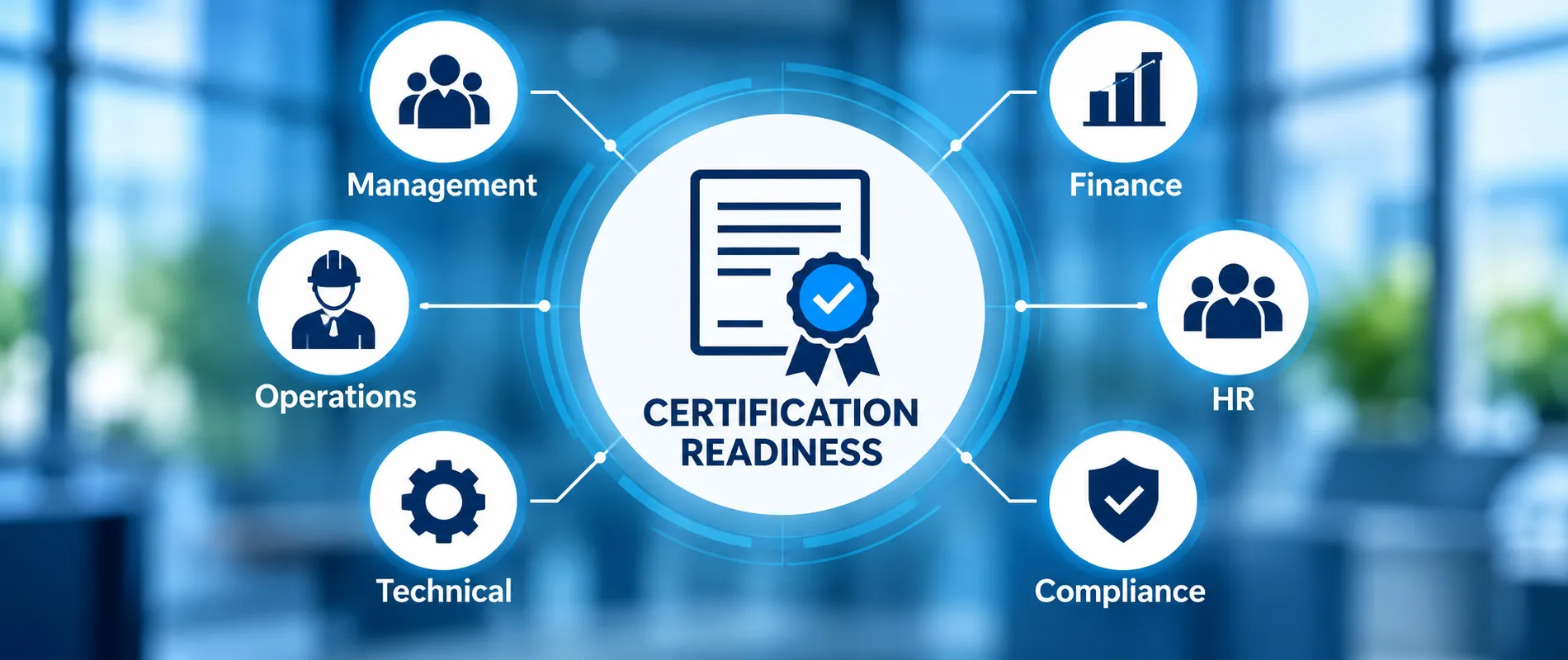
Businesses that are about to be certified according to ISO cannot necessarily count on the assistance of only a single training session to cover all employees. Various employees are charged with various responsibilities, authority and participation in the management system. Senior managers might be required to learn about the leadership and strategic roles whereas the process owners must be specific to the knowledge of procedures, controls, risk and performance requirements. Operational staff members will require applied knowledge based on their day to day activities whereas internal auditors will need specialized skills in auditing. Thus, role-specific ISO training assists organizations to equip employees with knowledge that is directly linked to their roles. When seeking iso training services in Saudi arabia, businesses must consider the ability of the training to deal with their organizational setup, industry needs and certification goals.
The employees should also be trained effectively to exhibit competency when the certification audit is conducted. Auditors can inquire the employees regarding their duties, practices, goals, documentation and controls. When employees comprehend their roles, they will be more inclined to describe their work and give pertinent evidence. The businesses must then evaluate groups of employees, find out areas of competencies, determine the appropriate training format, and evaluate the training providers and then make a decision. An effective training strategy facilitates a practical, measurable and certification-related learning process.
Identify Employee Groups That Require Training
Top Management and Leadership
The management ought to be aware of the certification objectives, policies, responsibilities, risks, resources and continuous improvement expectations of the organization.
Department Heads and Process Owners
Process owners need more information on relevant requirements, processes, process controls, objectives, risks and performance monitoring.
Operational and Frontline Employees
The practical training should include pertinent procedures, work instructions, control, reporting, and day-to-day duties to the operational employees.
Internal Audit Personnel
Internal auditors must have special knowledge of audit planning, gathering of evidence, interviewing, reporting, identification of nonconformity and follow up.
New and Newly Assigned Employees
The new staff and employees who are undertaking new duties ought to be allotted proper onboarding and training to avoid gaps in competency.
Map Training Requirements to Job Responsibilities.
Define Responsibilities Within the Management System
Examine job descriptions, process maps, procedures, and responsibilities allocated to each employee to identify what should be known by each employee.
Identify Competency Gaps by Role
Evaluating the performance of employees based on use assessment, interviews, audit results, observation, and supervisor comments will help in determining areas of employee gaps in knowledge or skills.
Match Training Depth With Employee Involvement
The involvement of the employee should be reflected in training. General workers might be in need of awareness whereas process owners might need fine grained technical and process knowledge.
Prioritize Roles With Greater Compliance Responsibilities
Critical process, audit, documentation, monitoring or corrective action employees might need a more thorough preparation.
Establish the Right Training Format for Each Role
Awareness Sessions for General Employees
Awareness sessions can explain policies, objectives, relevant requirements, and individual responsibilities in a simple and practical manner.
Operational Team Training of operations.
Demonstrations, examples, exercises, and scenarios are helpful to operational teams because they are based on their real activities at work.
Internal Auditor Training for Assigned Auditors
Specific training on the methods of audit, objective evidence, findings, reporting and follow-ups should be given to assigned auditors.
Leadership Sessions for Management Teams
The strategic tasks, goals, risks, performance, resources and management review should be addressed in terms of leadership.
Technical Training for Specialized Functions
Departments with specialized functions might need to undergo further training in risk management, document control, environmental controls, safety or information security.
Evaluate Training Providers Before Selection
Relevant Standard and Industry Experience
Select providers who have the right kind of knowledge about the relevant ISO standard as well as experience in the industry of the organization.
Trainer Qualifications and Practical Expertise
Examine credentials of trainers, experience in implementation, auditing experience, and field experience.
Customization of Training Content
The training needs to be flexible to the processes, the duties of the employees and the certification goals of the organization, and not on a generic content.
Delivery Methods and Learning Support
Think about a classroom, online or on-site, or blended and figure out whether or not learners can get support after training.
Training Materials and Completion Records
Ensure that the right learning materials, tests, certificates, attendance records and other pieces of evidence are given.
Compare Training Scope and Commercial Terms
Number of Participants covered.
Ensure that the number of participants is mentioned and that extra charges might be paid by extra employees.
Duration of training and schedule of delivery.
The time of training must give sufficient time to the employees to learn the relevant information and implement it.
Included Learning Materials and Assessment.
Ensure that there are assessments, exercises, workbooks, presentations, certificates among others.
On-Site, Online, and Blended Delivery Options
Flexible delivery is capable of assisting the businesses in training various departments without necessarily disrupting the business.
Pricing and other charges.
Compare the overall price, including the fees of the trainer, transportation, extra sessions, and examinations and follow-up assistance, where possible.
Connect Training With Certification Readiness
Awareness of the Employees on Relevant Requirements.
The employees are supposed to know what is required that directly influences their work and the reason why the requirements are needed.
Understanding of Documented Procedures
The employees should be aware of the procedures and work instructions that apply to their duties and how to adhere to them.
Capacity to perform the Allotted duties.
The training should assist in the employees explaining and showing how they carry out their real work.
Preparation of Auditor Interviews.
The employees are able to go through rehearsing responses to queries concerning their duties, operations, documentation and controls instead of memorizing conventional phrases.
Sign of Training and Competence.
Companies must ensure that they have appropriate evidence like attendance logs, evaluation, certificates and competency tests.
Measure Training Effectiveness Before the Audit
Knowledge Assessments
Quick assessments can be used to establish whether employees are knowledgeable about the pertinent requirements and duties.
Practical Demonstrations
To ensure that learning has been employed appropriately, supervisors can view employees in their real work to ensure that they are performing their tasks as expected.
Employee Feedback
Feedback may help find out vague topics, inappropriate methods of delivery, or the issues that may need more clarification.
Department-Level Readiness Reviews
The department heads can check the awareness of the employees, procedures, records, and controls prior to the certification audit.
Identification of Remaining Competency Gaps
Further coaching or training should be provided where assessment results show that there is need.
Maintain Role-Based Competence After Certification
Refresher Training
Refresher courses can also be used to re-enforce key requirements and to deal with recurring errors.
Training After Process Changes
When procedures, systems, technology, equipment, or responsibilities are altered then the employees should be provided with proper training.
Onboarding New Employees.
Upon employment, management system awareness and role specific training should be provided to the new staff.
Periodic Competency Reviews
Periodic re-evaluations assist companies to ensure that workers are still fit to handle the duties bestowed to them.
Maintaining Training Records
Maintain appropriate documentation of attendance, evaluations, certificates, competency reviews and refresher courses.
Key Criteria for Selecting the Right Training Solution
Businesses should consider:
- Fit with employee duties.
- Qualification and experience of the trainers.
- Industry relevance
- Content customization
- Delivery flexibility
- Assessment methods
- Training documentation
- Ongoing support
These are the criteria that assist businesses to make choices based on training that adds value to the real needs in the workplace rather than concentrating on the completion of courses alone.
Conclusion
Choosing effective training for certification readiness requires businesses to understand what employees actually do. Role-specific ISO training links learning and job responsibility, participation in processes, authority and compliance demands. Different levels of knowledge might be required by the management, process owners, operational employees, auditors and even new employees. Businesses are therefore advised to determine groups of employees, competency gaps, application of appropriate training format, and consider training providers in terms of qualifications, practical experience, customization, and delivery.
The measure of training should occur post training as well through assessments, practical demonstrations, employee feedback and department level preparedness reviews. Competence should still be upheld via refresher training, orientation, training process change, and regular reviews. Appropriately chosen iso training programs can assist organizations in enhancing employee awareness, proving competence, having credible training record and equipping employees with the ability to respond appropriately in the event of certification audits.